MFA Magazine Michigan Forest Association
 Representing Forests and Forest Owners Since 1972


Emerald Ash Borer
Emerald Ash Borer Info
Click here


Bill Botti's Tree Series
Click Here


Wildlife Series
Craig Kasmer's Wildlife Series
Click Here


Privacy Statement

Michigan Forests Magazine
Excerpts From Spring 2005 Issue

Conservation means the wise use of the earth and its resources for the lasting good of men.-Gifford Pinchot

IMPROVING FOREST RECREATION OPPORTUNITIES
By Rick A. Lucas, CD Forester

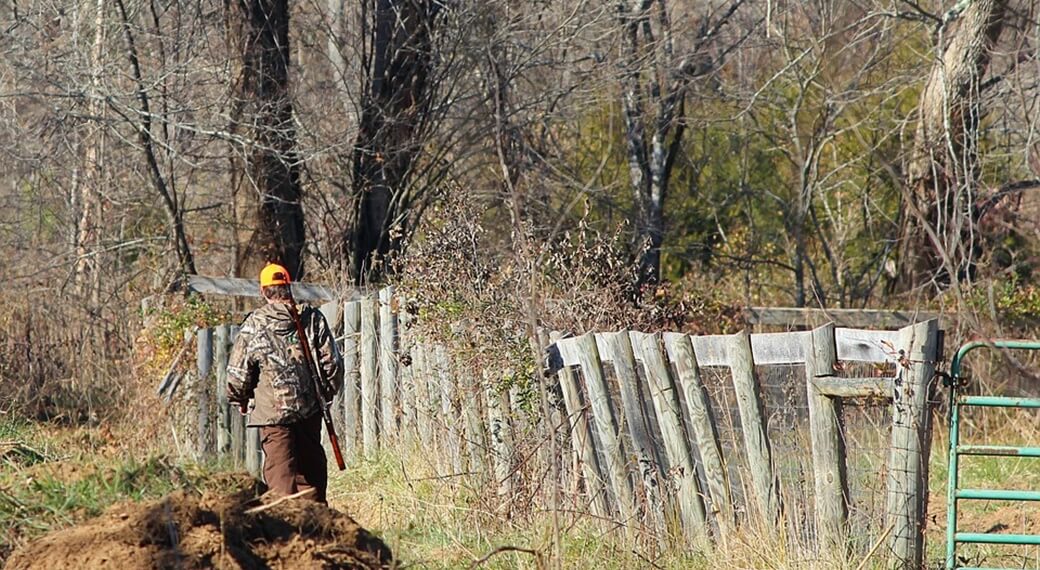
Those of you who know me know that deer hunting is one of my favorite forest recreation activities. And, I can think of no better place to enjoy this activity than in the "big country" of the western U.P. This past November marked the 23rd straight year that I traveled to the sunset side of the U.P. to partake in this outdoor activity. On one of my many excursions this past November, I discovered, quite by chance, this old trail that led me through literally thousands of acres of some of the most beautiful country the U.P. has to offer.

This trail, I would later learn, was once maintained by a local cross country ski club.

Following a few years of declining membership and the rising cost of maintenance, the group discontinued their efforts to keep the trail open and functional. All of this hardly mattered to me now. What did matter however was my discovery of an easy entrance into the heart of some of the best looking deer country I had found in some time. I would later determine by use of my GPS, that the core area I wanted to hunt was 1.6 miles from my parked truck. Far enough off the "beaten path" to provide me the quality outdoor experience I was looking for.

Just so that you know now, this isn't another deer hunting story. This is really about a very simple improvement that can be implemented on your property to greatly enhance the enjoyment of any number of recreational activities.

The benefits of participating in recreational activities have long been documented in terms of their positive effects on us as individuals and on society as a whole. The chance to reduce stress, exercise body and mind, and interact with others in an outdoor setting provides millions of us with numerous benefits directly related to our health, happiness and productivity. Every year, millions of Americans take to the woods to camp, picnic, hike, fish, horseback ride, study nature, photograph wildlife, or like me, hunt.

As a property owner, one of the most worthwhile investments you can make on your property is establishing a system of access roads and/or trails. A trail is an established route primarily used by a farm tractor, all-terrain vehicle, pickup, log skidder and/or foot traffic. Their primary purpose is to provide access to aid you in the management and enjoyment of your property. Recreational activities such as viewing wildflowers and picking mushrooms in spring, observing fall coloration, hunting, horseback riding, snowmobiling, riding all-terrain vehicles, skiing and hiking are all more enjoyable with a good trail system. A trail system opens your land to many recreational opportunities, but it also may provide access for fire protection, timber harvesting, tree planting, or other woodland management activities.

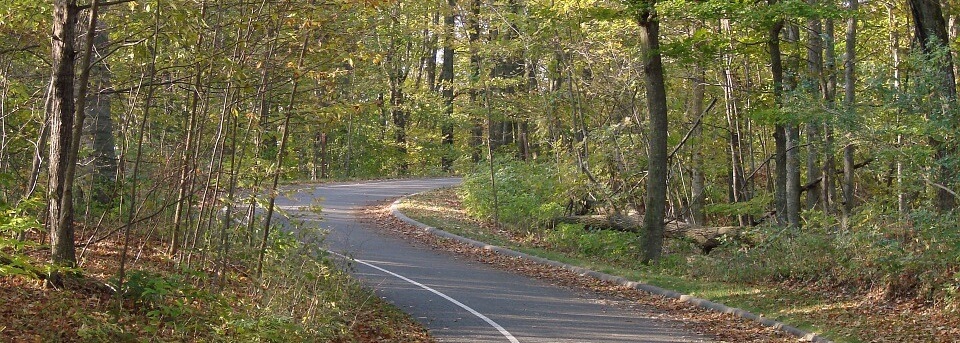
If enhancing habitat for wildlife is one of your objectives, regardless of which species or group of species of wildlife you decide to emphasize on your property, you can increase opportunities for recreational viewing of wildlife by maintaining a good access trail system. A well-planned trail can provide easy, quiet access to a variety of sites on your property so that you may observe wildlife unobtrusively. Numerous bends and curves should be incorporated to add an element of surprise and increase the likelihood of flushing a pat or catching a deer off guard. To maximize the variety of wildlife you may encounter, develop trails through various cover types and near key points of interest, such as a wetland or clump of evergreens.

Every trail system should be planned and developed as if it will become permanent. Initially, many trails are considered to be temporary, but often these temporary trails are used again and again. Therefore, the entire trail system should be designed before any construction begins. This progress may seem to take more time, but the trail system will be more efficient, less costly, and easier to maintain, and ensure minimum negative impact on water quality.

Local terrain and the purpose of the trail ill affect construction techniques. If the area is hilly then cutting and filling may be required to maintain a level trail if one is desired. Soft ground will require more preparation such as packing or surfacing. Surfacing and trail bed preparation can range from cleared bare ground, mulch, wood chips, or gravel to asphalt paving.

Soils are a very important consideration in trail development. Soils high in silt and clay are muddy when wet, dusty when dry, and are erodible. Soils high in sand are unstable when dry and support few plants. Organic soils are extremely fragile but moderate amounts of organic matter increase soil stability. Soils with moderate amounts of sand and loam are generally the most desirable for trails. Any area that is environmentally sensitive should be avoided to prevent damage.

Don't overlook the value of this simple improvement to your property. In addition to increasing the ease at which you can move about your property, trails also serve as surefire means to re-orient you if you should become turned around. Now back to the hunt, if only I would stop looking up into all the big beautiful trees, I would likely increase my odds of seeing a deer.


MFA Report
by McClain "Mac" Smith, Jr.
Executive Director

USE MORE WOOD

Many people think we should use substitutes for wood to save trees. We (people in Michigan and people all over the United States) should use more wood, not less! Why?

  • Wood comes from trees that grow in forests.
  • We all need and use products made from wood on a daily basis.
  • The energy to produce wood is free - it comes from the sun.
  • The manufacture of wood products (lumber, furniture, paper, etc.) uses less fossil fuel than the manufacture of substitutes (such as steel or concrete).
  • The manufacture of wood products causes less environmental pollution than the manufacture of substitutes.
  • Foresters use a knowledge of natural processes to mimic nature and to reduce the time to produce high quality forests.
  • A managed forest with healthy young growing trees sequesters much more carbon than an overmature unmanaged forest of dying or rotting trees.
  • Forests are renewable; when trees are harvested, others replace them.
  • Using more wood instead of less wood is a win-win situation.

This is the short version of why we should use more wood. If you want an explanation or more information, read on.

But, don't we have to cut down trees to get wood? Of course! Doesn't cutting trees destroy our beautiful forests? Not at all. Forest destruction is caused when we remove trees and construct buildings, or pave parking lots, or convert the land to other uses. Destruction can also occur when logging is done in unsuitable areas or in suitable areas with inappropriate methods that cause significant erosion. Proper harvesting of trees, followed by planting or natural regeneration, can provide a continual process of use and renewal, which mimics nature but is much more efficient than letting nature take its course. Anyone who has grown a flower or vegetable garden knows that you get more flowers or more vegetables if you help the process by providing a good seedbed and removing the weeds. Similar principles apply to forest management except that forest management involves a much longer time cycle. One year is a normal cycle for many agricultural crops, whereas the shortest tree rotations for pulp and paper are usually at least 10-15 or 30 years and quality hard- woods often take 50-100 years.

But you don't like the appearance of horizontal tree tops and stumps where trees used to stand and you especially don't like clearcutting? I agree that fallen trees and especially clearcuts are unsightly, but it is easier to take when you realize that it is only temporary and is part of a process of renewal. Probably all of us, foresters and loggers included, have a natural tendency to want to preserve the things we enjoy like a favorite tree to picnic under, or a field at the edge of a woods where we watched deer or rabbits frolic, or a spot at the beach where we vacationed as kids. That's natural. We want the things we like to continue unchanged. Unfortunately, or fortunately, in forestry, as in life, the only thing that remains constant is change. Weather changes. People grow and die. Trees, even redwoods and sequoias, grow and die eventually.

Doesn't timber harvesting wreck the area for use by wildlife? Certainly logging makes changes. The changes may benefit some species and be harmful to others. In the long run more species are likely to benefit from timber harvest than are harmed by it because the early successional vegetation following harvest has much more food value. Some species may have to move to other areas temporarily for the right kind of habitat. Many businesses were closed in the West and many individuals lost their jobs due to concerns about the spotted owl. I am told that the original concerns for the spotted owl were from studies of virgin timber where each pair of spotted owls required about 300 acres of territory to raise a family. The reason for this requirement was that, in virgin timber, the main food source was flying squirrels. It was later found that spotted owls do very nicely in open large timber by feeding on wood rats, which are much more abundant in the open timber than are the flying squirrels in dense old growth timber.

Isn't an area with a recent timber harvest a poor place for recreation? It probably is, especially in the case of a small area where harvesting (not necessarily clear cutting) covered most of the area. In most cases other suitable areas would be available nearby and, in large enough ownerships, proper planning would permit leaving some areas for recreation until harvested areas recover. On federal ownerships like the National Forests there should always be plenty of areas suitable for recreation at any given time. One other point: Proper management includes setting aside some areas for special uses such as parks, wilderness areas, study areas, and other areas with special attributes. Management of forests does not mean that all areas will be harvested; in fact, many areas are unsuitable for harvest for various reasons. On the other hand, no management (attempted preservation) is not a good prescription for all forested land.

As a forester, I have always been puzzled why some people seem to think that it is sinful to make money when trees are cut. In some of the changes in National Forest management by the Bush administration, some people are willing to accept some thinning n the National Forests to promote health, but they want to pay contractors to do the work rather than sell the wood to be removed. Also many people oppose salvaging trees that have been killed by fire or insects. In my book, this is WASTE, pure and simple WASTE! It did not make sense several years ago when the nation and the state had budget surpluses and it doesn't make sense now with national and state budget shortfalls. Also limiting cutting to "thinning," when a harvest of mature timber is needed, is ridiculous. We can use appropriate harvesting to help the nation's finances.

Many people think we are running out of trees and destroying our forests. If that is what they believe, you can't blame them for making bad decisions. Since we are not running out of trees or destroying our forests, it makes sense to use our forests wisely for all the things they produce. If we manage forests properly, we can continue to supply consumer products, such as lumber, veneer, paper products, furniture, edible foods, and much more, and at the same time provide non-consumptive benefits, such as wildlife habitat, clean air, quality water, soil protection, recreation, and aesthetic values

I believe that most MFA members will agree with most of what I have written here.

What we need to do is to spread this information to our kids, our neighbors, our friends and acquaintances so that we move forward without all the wasteful bickering over forest policy that has characterized the last 30 or 40 years. It is my opinion that most of the bickering stems from lack of information or misinformation about forestry. I have been told that the facts don't matter, that it is how people feel that matters. I agree that people act or react because of the way they feel, but I also believe that the way they feel depends a lot on their perception of the facts.

MFA is trying to do some of this education through the Wanigan. We need your support for the Wanigan and we need your support with your friends and acquaintances. Let people know why we should USE MORE WOOD instead of less. In case some readers may think I am suggesting that we be wasteful with wood, I simply mean that, where wood is a good choice for any use, we don't need to seek substitutes; using wood is probably the best choice from all considerations.

I would like to recognize Patrick Moore of Vancouver, one of the founders of Green Peace, as the originator of many of these thoughts.


MICHIGAN STATE UNIVERSITY EXTENSION
By Bill Cook MSU Extension Service Forester
Emerald Ash Borer

The words "emerald ash borer" increasingly create concern among many people in Michigan, especially forest landowners and homeowners with ash trees. Government agencies and universities have been striving to understand this exotic beetle, determine its distribution, and develop strategies to address a very serious tree pest.

The 2002 discovery of the emerald ash borer (EAB) happened long after the beetle became well-established in southeastern Michigan and had been spread to many counties. This "artificial" spread was largely the result of humans unknowingly moving infested materials, such as nursery trees, firewood, and logs. In the world of exotic pest eradication, the EAB presents a formidable task, maybe like slamming the barn door and rounding up the horses after they ran out.

Ideally, the introduction should have been prevented. However, millions of tons of cargo reach North American shores every year. Budgets required to inspect significant portions of imported materials are prohibitive. It is a matter of priorities, perhaps, but a fiscal reality. In the end, our collective appetite for cheaper goods will almost certainly bring more exotic pests to our shores. Emerald ash borers kill ash trees. There are at least 700 million ash trees in Michigan alone and all of them are at risk. Ash often serve disproportionately important roles in many settings, such as in wetlands and riparian zones. In residential areas, ash has long been a favored tree because of its fast growth, straight trunk, and until recently, minimal pest problems.

The loss of ash is one more battle in the exotic species assault on our natural heritage. American chestnut and American elm have been reduced to a remnant of what they once were. Michigan butternut and beech are threatened by exotic pests. Balsam fir and hemlock further east are dying from exotic insects headed this way. The list continues. Many scientists believe that exotic pests are the single biggest threat to the diversity and productivity of eastern forests.

It's important to understand that natural spread of EAB is fairly slow in most cases. Studies by MSU scientists indicate that the beetles move between 0.5 to 2 miles each year. What appears as rapid spread is actually an improved ability to find EAB.

Finding new and low level infestations is difficult. The borers can be present in an area for several years before the trees begin to decline. Many recently discovered EAB populations have actually existed for at least a few years. Quarantine zones in southeastern Michigan expand as EAB distribution becomes better known.

Trap-tree survey techniques were developed and tried for the first time only last year. Surveys were conducted at fairly coarse grids throughout much of Michigan be- cause of limited budgets. They actually worked better than expected and resulted in the discovery of several "outlier" populations in northern and western Lower Peninsula. The Upper Peninsula, parts of northern Michigan, and northern Ohio and Indiana will be surveyed again this year. Most scientists expect additional EAB infestations to be found over the next few years. State officials have targeted the Straits area for intensive survey and detection work. If EAB populations are found in the Upper Peninsula, they will likely be a high priority for eradication.

EAB is not merely a Michigan or Lake States issue. This exotic pest threatens at least 16 species of ash that grow across the entire continent. Efforts to reduce the density of ash in forests to help control the spread of EAB will require a considerable amount of planning and action, at a level of magnitude not often incorporated into forest management. Both public and private landowners will need to be involved. The action might be likened to setting a large backfire to stop the spread of a wildfire, except the spread of EAB is much slower than a wildfire.

What can a landowner do? Stay current with EAB information. Visit the website: www.emeraldashborer.info. Response to the EAB threat needs to be carefully considered by all property owners. A single recipe for action simply does not exist. Watch for an MSU Extension bulletin about EAB for woodland owners this spring.

If your property is not close to a known EAB infestation now, prepare for the day when new infestations are discovered on or near your property. Know which species of ash are in your woodland, where they grow, and how the ash are distributed.

In much of the Lower Peninsula, outside of the quarantined areas, landowners should consider harvesting ash trees before quarantines are imposed. The abundance of ash, the distance from known EAB populations, and the long-term goals of the landowner are key factors in making decisions. Removing ash will help contain the spread of EAB.

However, keep in mind that ash products such as logs, firewood, or chips cannot be moved outside quarantined areas without special permission and certificates issued by the Michigan Department of Agriculture.

In all cases, work with a professional forester to consider the options. Be wary of unscrupulous timber buyers. Unless your land is already in a quarantine zone, you have time to learn about the EAB, work with a forester, and decide what you think is best for your property. However, don't underestimate the threat of EAB and the role that you might play in combating this serious pest.


WORK TO IDENTIFY POSSIBLE FOES OF ASH-KILLING BEETLE
BY LUIS PONS January 31, 2005

Since its discovery near Detroit in 2002, the emerald ash borer has devastated ash tree populations in Michigan, Ohio and Ontario and has been sighted elsewhere.

Now Agricultural Research Service scientists, including those at the ARS Systematic Entomology Laboratory (SEL) in Washington, D.C., and Beltsville, Md., are working to precisely identify parasitic wasps that seem to be natural enemies of this imported metallic-green beetle, Agrilus planipennis Fairmaire. Thought to have arrived here about six years ago, hidden in wooden packing material, the borer is threatening to become a major U.S. pest.

U.S. Forest Service and Michigan State University researchers found the potentially beneficial wasps in a study plot in Livonia, Mich., and sent them to the SEL for identification. There, entomologists Michael Gates and Michael Schauff identified them as species in the genus Balcha, which like to snack on emerald ash borer larvae, and in the genus Pediobius, which attack the borer's eggs.

According to Schauff, it is suspected that at least one of the wasp species found was unknown to science up to this point. Schauff works at SEL's Beltsville location, while Gates is based at its Washington facilities.

Precisely pinpointing the wasps' identities will entail much work, as the genus Pediobius alone contains about 215 known species worldwide, 32 of which are found in North America. But knowing their exact identities will be key if the wasps are to be used to control the emerald ash borer. SEL's work is just part of ARS' emerald ash borer campaign. Entomologist Paul W. Schaefer and colleagues in the agency's Beneficial Insects Introduction Research Unit at Newark, Del., hope to analyze the borers' DNA. They've also traveled to South Korea, Japan and Mongolia in search of the insect's origin, hoping to also find its natural enemies. Ash is a valuable hardwood that provides habitat for wildlife, ornamentals for landscapes, and wood for various products.

Read more about the research in the February 2005 issue of Agricultural Research magazine. ARS is the U. S. Department of Agriculture's chief scientific research agency.

WaspManual montage image (a technique pioneered by Klaus Bolte of Canada) of a Balcha wasp, a potentially beneficial insect that attacks the ash borer.

To create this image, the wasp specimen was dissected-legs, antennae, wings and other body parts separated -then the parts were digitally captured and reassembled in Photoshop. This technique allows exquisite detail to be shown.


River
Want an easy way to approximate the width of a river? Click here.